
Founded in 1971 by Peter Cadwallader and Al Hanover, H.P. Cadwallader is a family-owned and operated sheet plant in the Philadelphia area. “Pete and Al recognized a need in the market to provide exceptional service to small customers who were being pushed aside by the larger corrugated manufacturers,” says HPC’s General Manager, Tom Lebonitte. “They could have taken shortcuts, but Pete and Al chose to grow the company brick-by-brick.” By the late 1980s, HPC had expanded it’s building to over 40,000 square feet and had grown an established customer base in the Philadelphia market.
The early nineties marked a period of investment and growth for HPC. To serve its diverse customer base, HPC was looking to invest in machinery that could set up quickly and produce high quality RSCs. EMBA was an innovator in quick setup machinery and a natural fit for that business model. So, in 1990 HPC installed its first EMBA, a 244 model. Building off that success, HPC installed an EMBA160 in 1995.
By the end of the 1990s, HPC had established a reputation in the Philadelphia market for quick turn-around of high-quality RSCs. As they looked toward the 21st century, Al and Pete reinvested in the company to expand HPC’s product offerings. Between 1999 and 2003, HPC installed an EMBA290 along with rotary die-cutters, flatbed die-cutters, and specialty gluers from other brands. All of that investment led to continued success in the 21st century. The late 2000s saw HPC expanded its building for a third time and install its fourth EMBA, a 170QS with glue detection and speeds up to 420 boxes per minute.
The 2010s saw HPC transition to the next generation of ownership upon the passing of its founders, Pete and Al. After Brooke Williams joined HPC in 2013 and became company president in 2015, he was forced to confront the challenges of aging equipment in a very competitive market, “We needed a succession plan for our EMBA290, which was our most important machine at the time. We also wanted the ability to compete in new markets. While the 290 could still set up extremely fast for a 50” FFG, it was limited in terms of run speed, printing, and die-cutting capabilities.”
Brooke Williams tasked General Manager Tom Lebonitte and Operations Manager Jeb Coleman with evaluating the equipment market for a new FFG. In 2019, after exploring many options, HPC ultimately decided to expand its building for a fourth time and purchased its fifth EMBA, the 245 Ultima. “We had some experience with servo-driven machines.” Says Tom Lebonitte. “The speed and reliability of a servo-driven machine was a big factor for us in choosing the EMBA245 over some other models we were considering. We also had a great deal of comfort with the relationships we’d made at EMBA over the previous 3 decades.”
The installation of the EMBA245 was scheduled for March of 2020, which couldn’t have been a better time, or a worse time, depending on your perspective. “Our machine was in the middle of the Atlantic Ocean when the world shut down,” says Tom Lebonitte. “As an essential business, we got permission from the Governor of Pennsylvania to proceed with the installation. Our employees and vendors did a great job installing the machine despite all the disruptions and our 245 was making boxes by early May.”
The EMBA245 immediately began setting company records in terms of boxes per hour and MSF per hour. Jeb Coleman recalls “There was a ton of box demand in 2020. Our EMBA245 was fully booked immediately and thankfully it produced above and beyond our expectations.”
“Before we decided to buy another EMBA, we had talked to other 245 Ultima owners. The ops guys at those facilities had told us what Michael [O’Brien] and George [Linn] had told us, that the non-crush technology and the vacuum folder were far superior to other FFGs and superior to our older EMBAs” says Tom Lebonitte. “We understood the science behind box crush. It’s been known for decades that crush during manufacture will deform the flutes and lead to reduced edge crush strength. As manufacturers, we’re constantly monitoring our caliper to minimize crush and caliper loss. With a perfectly maintained and calibrated feed roll and a skilled operator, the small amount of crush would not exceed the elastic limit of the flutes and the board would spring back to its original caliper. Zero caliper loss was always our goal with a small percentage of caliper loss deemed acceptable. We didn’t realize, or at least we didn’t fully appreciate, how much box strength we were losing from that momentary flute deformation caused by feed-roll crush. EMBA purported to have eliminated that problem with the 245 Ultima by removing the feed roll. When we started running the EMBA245 in mid-2020, we quickly realized that the performance gains that EMBA was claiming were absolutely real.”
“We’ve been able to use lighter weight board combinations while simultaneously providing stronger boxes” says HPC’s Sales Manager, Lee McEntee. “It’s an enormous advantage.”
“The non-crush technology provides consistent board caliper into the printing station, which allows us to better control our pressure. It also helps glue tab waste cut and strip cleaner” say Operations Manager, Jeb Coleman. “The slotting section is also much improved. The EMBA245 cuts straighter, cleaner slots than I see on any other boxes from our competitors. As long as you keep the machine clean, the slotter is relatively low maintenance. On our older EMBAs, we might have replaced male slot knives every month and female rings every six months. The EMBA245’s slotter is so perfectly aligned that the male slot knives were making clean, straight cuts after two years. We’ve had the machine almost 6 years and have yet to replace the females. They’re still cutting perfect slots.”
In the folding section, the APS gives the operator more control of the folding process and the ability to eliminate skew or gap inconsistencies. Jeb Coleman continues, “Our older EMBAs would bias toward folding the boxes too tight when we started running high speeds. Gap variance at the manufacturer’s joint was one of the most common complaints from our customers using case erectors. With the EMBA245, we haven’t had that issue at all. It makes consistent gaps at the manufacturer’s joint with very little variance from box-to-box.”
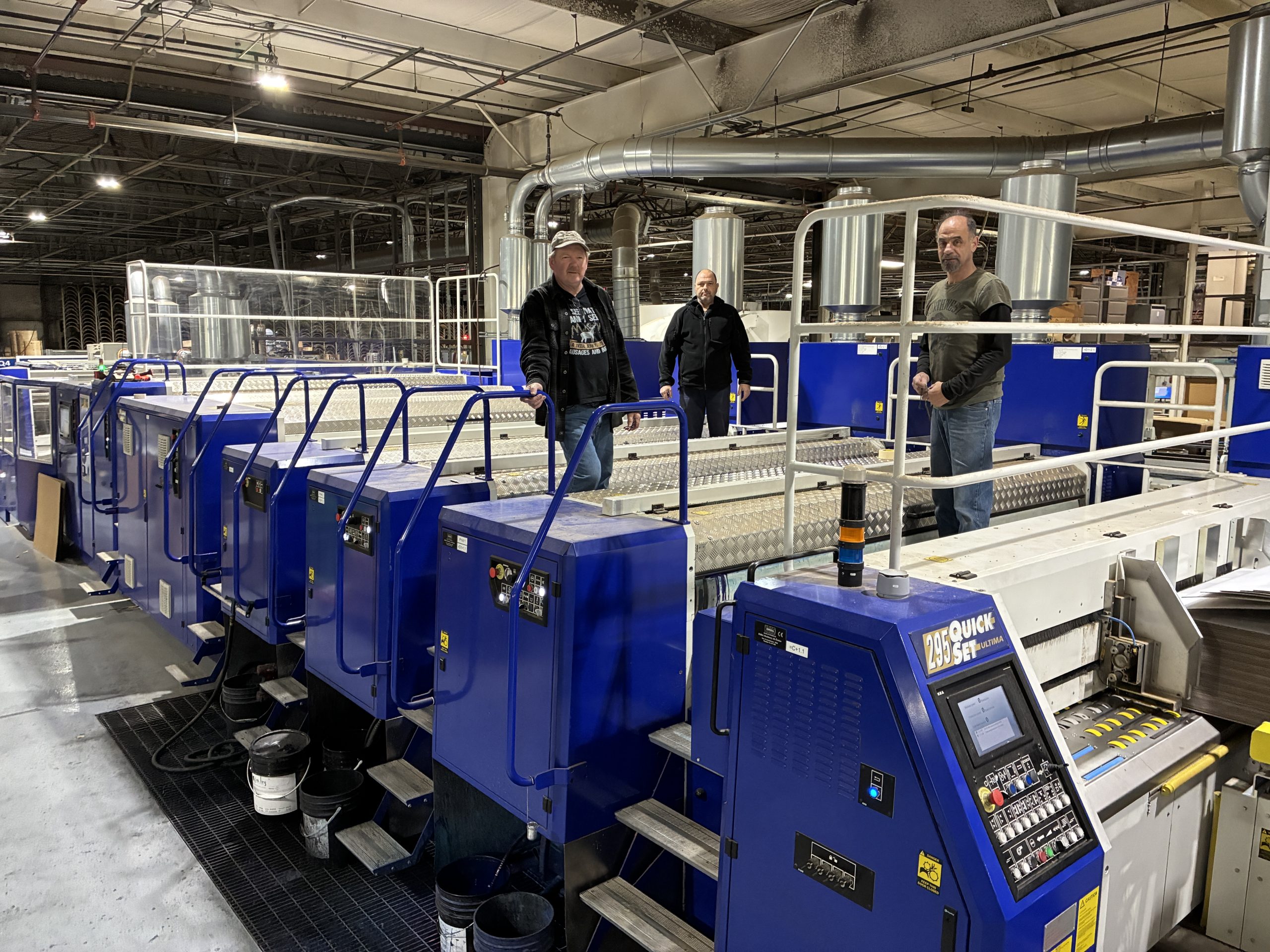
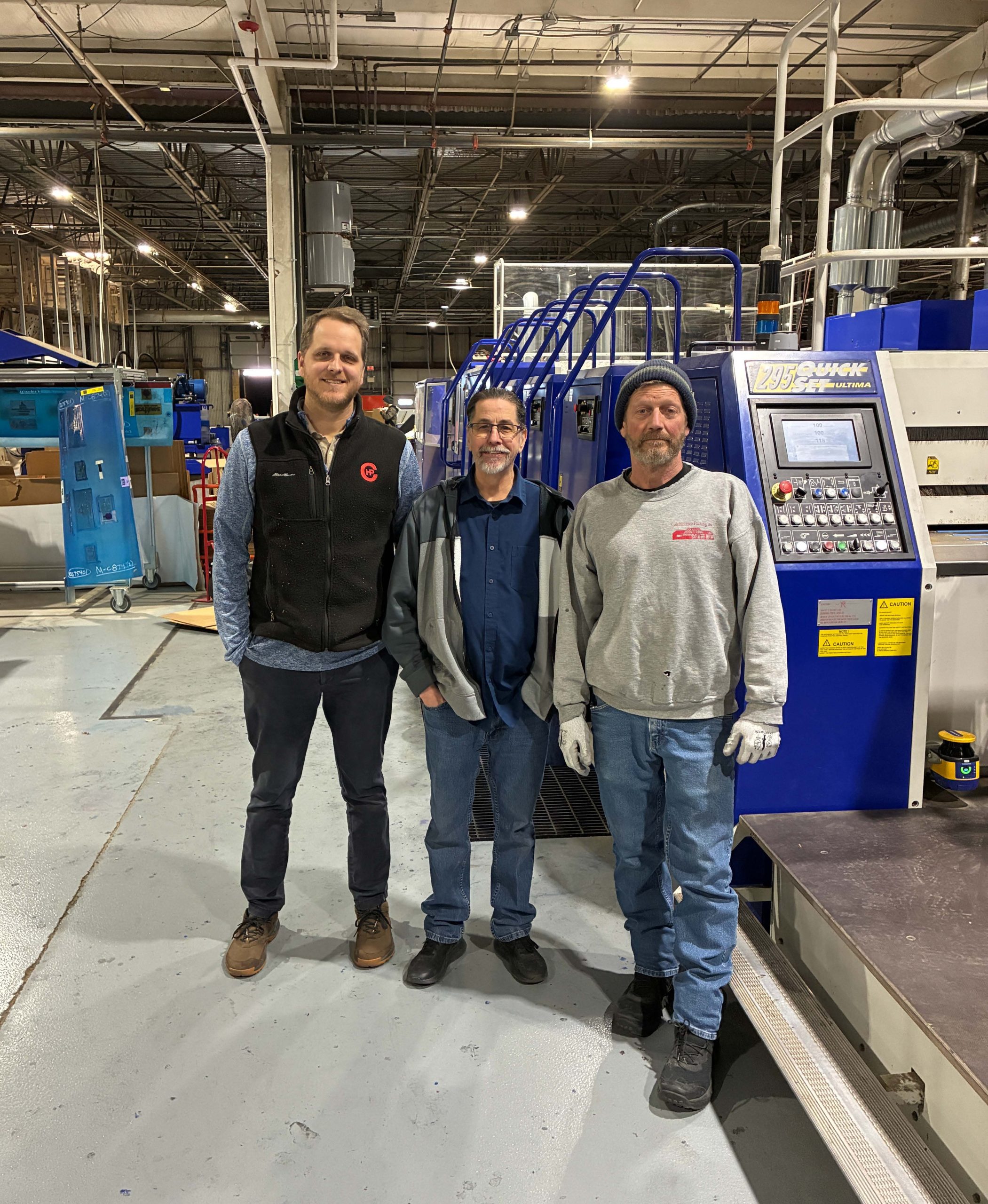
In 2025, HPC retired its workhorse EMBA290 when it installed its sixth EMBA, the 295 QS Ultima. “The 295 comes with all of the same advantages as the 245, plus a few new features that make it an even more versatile machine” says Jeb Coleman. “All of the drives and PLCs are the latest generation, which provide some performance improvements and protect it from future obsolescence. Whenever you buy one of the first machines of a new model, you understand that there could be some bugs to work out and there have been a few. We were confident EMBA would take care of us and they have done so. “As for new features, of course, it’s larger. It covers the entire spectrum of box sizes you would expect from a 50” flexo, plus some niche shapes that other flexos can’t handle. The improved folding section allows us to run some box dimensions that would normally be problematic for a 50” flexo and the Highbox feature means we don’t have to remove slot knives to run them.”
The oversized creaser and pre-creaser (over 60 inches in circumference), create a deep and true score without tearing the inside liner or cracking the outside liners. Jeb Coleman says “We used to run a lot of heavyweight board on our 290 and we were concerned about the 295’s ability to control the large, heavy sheets with vacuum alone, but it has not been a problem. The liquid creasing helps with folding heavy Mullen grades. While the 245 had great folding accuracy on its range of box sizes, the 295 brings that same accuracy to a larger range of box sizes. The EMBA295’s longer folding section helps broaden that to unusual shapes as well.” The EMBA295 can produce end-loading RSCs and FOLs without changing slot knives and without jams or skewing in the folder.
Williams concludes: “EMBA has been a great partner for HPC for almost 40 years. As HPC’s business has evolved over that time, EMBA has brought a series of innovations to the market that have been perfectly suited and timed to meet HPC’s needs. Our most recent investments in the EMBA245 and EMBA295 have been great steps forward for our company.”
Published in IPBI North America, Spring, 2026